Essential knowledge spanning markets to kalshi trading opportunities now
The financial landscape is constantly evolving, with new avenues for investment and participation emerging regularly. Among these, event-based trading platforms are gaining traction, offering individuals the opportunity to speculate on the outcomes of future events. One such platform is kalshi, a regulated exchange that allows users to trade contracts based on the predicted results of political events, economic indicators, and even sporting contests. This innovative approach to finance is attracting attention from a growing number of participants intrigued by the prospect of applying market principles to predict real-world occurrences.
Traditional financial markets often focus on the performance of companies or assets over extended periods. Event-based trading, however, introduces a shorter timeframe and a more direct link to specific, measurable outcomes. Platforms like kalshi move beyond conventional investment strategies, inviting users to leverage their knowledge and analytical skills to anticipate future events and profit from accurate predictions. This dynamic environment presents both opportunities and challenges for participants, requiring a nuanced understanding of the underlying events and the mechanics of the platform itself. The appeal lies in its accessibility and potential for rapid gains, but also necessitates a careful approach to risk management.
Understanding Kalshi Contracts and Markets
At the heart of the kalshi platform lies the concept of contracts. These aren't agreements in the traditional legal sense, but rather financial instruments representing a claim on a payout if a specific event occurs. Each contract is tied to a distinct question with a binary outcome – yes or no. For example, a contract might ask, "Will the US Federal Reserve raise interest rates by 0.25% at its next meeting?" Traders then buy or sell these contracts, effectively betting on the probability of the event happening. The price of a contract fluctuates based on supply and demand, influenced by the collective beliefs of the traders. If more people believe the event will occur, the price of the “yes” contract will rise, and vice versa.
Kalshi operates as a designated contract market (DCM), regulated by the Commodity Futures Trading Commission (CFTC). This regulatory oversight provides a layer of protection for traders, ensuring a degree of transparency and fairness. However, it also means that certain restrictions apply, and the platform adheres to specific compliance requirements. Different markets are opened and closed based on the event timeline, and contract expiration dates are fixed. Understanding these dynamics is crucial for successful trading. Market liquidity, determined by the volume of trading activity, also influences the ease with which contracts can be bought or sold, and affects the spread between the buy and sell prices.
The Role of Market Liquidity and Price Discovery
Market liquidity is a vital component of a healthy trading environment. Higher liquidity means more buyers and sellers are actively participating, resulting in tighter spreads and smoother execution of trades. Kalshi’s liquidity can vary depending on the popularity of the event and the level of interest among traders. Events with widespread public attention typically attract more participation, leading to greater liquidity. Price discovery, the process by which the market determines the fair value of a contract, is also directly influenced by liquidity. When there’s a robust flow of information and active trading, the price better reflects the collective assessment of the event's probability.
Insufficient liquidity can lead to price manipulation or significant slippage—the difference between the expected price and the actual price at which a trade is executed. Traders should carefully monitor the order book and trade volume before entering a position. Analyzing historical price patterns and understanding the factors that drive demand and supply are essential skills for navigating kalshi markets effectively. The regulatory framework implemented by the CFTC also encourages fair price discovery and discourages manipulative practices.
| Contract Type |
Event Example |
Potential Payout |
| Political |
US Presidential Election Winner |
$1 per contract if prediction is correct |
| Economic |
Change in US Unemployment Rate |
$1 per contract if prediction is correct |
| Sporting |
Winner of the NBA Championship |
$1 per contract if prediction is correct |
This example illustrates how different types of events are represented on the kalshi platform, and the basic payout structure for successful predictions. The value of the payout is standardized to a dollar amount per contract for simplicity of trading, though the actual price of the contract will fluctuate based on market conditions.
Strategies for Trading on Kalshi
Successful trading on kalshi requires a combination of analytical skill, risk management, and a deep understanding of the events being traded. Unlike traditional stock or commodity trading, event-based trading relies heavily on predicting the likelihood of a specific outcome. One common strategy is to identify events where you have a strong conviction about the outcome, based on research, expert opinions, or unique insights. For example, if you closely follow a particular political race, you might believe a specific candidate has a higher probability of winning than the market suggests. You could then buy contracts predicting that candidate's victory, hoping to profit when the price rises as more traders come to the same conclusion. Diversification can also play a key role; spreading investments across multiple events and markets can mitigate risk.
Another effective strategy is to exploit market inefficiencies. This involves identifying discrepancies between the market price of a contract and your own assessment of its fair value. These discrepancies can arise from information asymmetry, behavioral biases, or simply temporary market fluctuations. However, identifying and capitalizing on these opportunities requires a keen eye for detail and a willingness to take contrarian positions. Scalping, a short-term trading strategy focusing on small price movements, can be applied to kalshi markets, but requires quick reflexes and a thorough understanding of order execution. It's also essential to consider the commission fees associated with each trade, as they can impact profitability.
Understanding Probability and Risk Management
Probability is the cornerstone of successful kalshi trading. Accurately assessing the likelihood of an event occurring is paramount. Traders frequently utilize statistical models, polling data, and expert forecasts to refine their probability estimations. However, it's important to remember that predictions are rarely perfect, and uncertainty is inherent in the process. A strong grasp of probability concepts, such as Bayesian updating, can help traders refine their beliefs as new information becomes available. Understanding the implied probability reflected in the contract price is also crucial; it represents the market's collective assessment of the event's likelihood.
Risk management is equally critical. Setting stop-loss orders to limit potential losses is a fundamental practice. Determining your position size based on your risk tolerance and account balance also ensures that a single losing trade doesn't significantly impact your capital. Avoid overleveraging your positions, as this magnifies both potential gains and losses. Constantly monitoring your exposure and adjusting your strategy based on changing market conditions are essential elements of prudent risk management. Diversification across different events and markets is an effective way to reduce overall portfolio risk.
- Diversify your portfolio across multiple events and markets.
- Set stop-loss orders to limit potential losses.
- Avoid overleveraging your positions.
- Continuously monitor market conditions and adjust your strategy accordingly.
- Thoroughly research the events you are trading.
These bullet points present simple rules to follow to better trade on kalshi and similar platforms. They emphasize the need to actively manage risk while pursuing opportunities.
The Regulatory Landscape of Event-Based Trading
As a relatively new financial innovation, event-based trading platforms like kalshi are subject to evolving regulatory scrutiny. The Commodity Futures Trading Commission (CFTC) plays a central role in overseeing these markets in the United States, ensuring fair practices and protecting investors. The CFTC’s regulation aims to prevent manipulation, establish transparent trading rules, and promote market integrity. This regulatory framework provides a degree of confidence for participants, but also imposes compliance obligations on platform operators like kalshi. The specific regulations governing event-based trading are still being refined as the industry matures, and changes are possible in the future.
One key aspect of the regulatory landscape is the requirement for platform operators to establish robust risk management systems. These systems must be designed to prevent market disruptions, minimize counterparty risk, and ensure the orderly functioning of the markets. Furthermore, platforms must implement Know Your Customer (KYC) and Anti-Money Laundering (AML) procedures to prevent illicit activities. The CFTC also monitors trading activity for potential manipulative practices and has the authority to investigate and prosecute violations. International regulatory approaches vary, and the global harmonization of rules governing event-based trading remains a challenge.
Looking Ahead: The Future of Kalshi and Event-Based Trading
The future of kalshi and event-based trading appears promising, with potential for continued growth and innovation. As awareness of these platforms increases and trading technology improves, we can anticipate greater participation from both individual and institutional investors. The expansion of event coverage—including more niche and specialized markets—will further broaden the appeal of event-based trading. Integration with other financial technologies, such as decentralized finance (DeFi), could also unlock new opportunities for innovation. However, regulatory uncertainties and the potential for market manipulation remain key challenges that need to be addressed.
One trend to watch is the increasing use of artificial intelligence (AI) and machine learning (ML) in event-based trading. These technologies can be used to analyze vast amounts of data, identify patterns, and generate predictive models. AI-powered trading algorithms could potentially identify profitable opportunities and execute trades automatically, but also raise concerns about algorithmic bias and market instability. The ability to accurately forecast event outcomes and effectively manage risk will be critical for success in this evolving landscape. The long-term success of platforms like kalshi will depend on their ability to navigate the regulatory environment, maintain market integrity, and adapt to the changing needs of traders.
- Research the event thoroughly before trading.
- Understand the potential payout structure of each contract.
- Develop a risk management plan.
- Monitor market conditions continuously.
- Be aware of the regulatory environment.
These actionable steps lay out a pathway to utilizing kalshi effectively, and should be followed for the most effective results. The steps emphasize thorough preparation, informed decisions, and active monitoring.
Expanding Applications Beyond Financial Markets
The principles behind kalshi aren’t limited to financial trading; the core concept of predicting outcomes can be applied to a remarkably diverse range of fields. Forecasting in areas such as political science, epidemiology, and even disaster preparedness can benefit from the collective wisdom and incentivized prediction found on platforms like kalshi. Imagine a system where experts and the public alike can contribute to predicting the spread of a disease, allowing for more proactive and targeted public health interventions. Or consider the application to predicting the likelihood of infrastructure failures, enabling preemptive maintenance and reducing the impact of disruptions.
Furthermore, the use of prediction markets can improve the accuracy of internal forecasting within organizations. Companies can leverage the collective intelligence of their employees to predict project timelines, sales figures, or market demand. This can lead to more informed decision-making and improved resource allocation. The key is providing incentives for accurate predictions and creating a transparent environment where information can flow freely. As the technology and regulatory frameworks mature, the potential applications of event-based prediction will continue to expand, offering valuable insights and empowering better outcomes across a wide spectrum of industries and challenges.

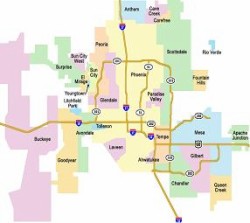 We serve the entire Phoenix area, including
  We accept Cash, Checks and Major Credit Cards.