
- Remarkable patterns surrounding the lucky wave reveal hidden ocean dynamics
- The Role of Underwater Topography in Wave Formation
- Wave Focusing Mechanisms
- Atmospheric Influences and Current Interactions
- The Role of Wind and Pressure Systems
- The Impact of Refraction and Diffraction
- Constructive and Destructive Interference
- Statistical Analysis of Wave Events
- Applications Beyond Surfing: Coastal Erosion and Hazard Mitigation
- Future Directions in Wave Modeling and Prediction
Remarkable patterns surrounding the lucky wave reveal hidden ocean dynamics
The ocean, a realm of perpetual motion and hidden forces, often presents phenomena that capture the imagination and challenge scientific understanding. Among these intriguing occurrences is the so-called “lucky wave,” a seemingly anomalous wave pattern observed in certain coastal regions that has sparked curiosity among surfers, meteorologists, and oceanographers alike. This unusual wave formation isn't simply a matter of fortunate timing for wave riders; it hints at deeper, more complex interactions within the marine environment, demanding closer examination to reveal its origins and potential implications.
While the term “lucky wave” is often used colloquially, referring to particularly well-formed or unexpectedly powerful waves, the phenomenon extends beyond anecdotal experience. Certain documented instances suggest a predictability to these waves, a repeating pattern that suggests underlying oceanographic drivers. Understanding these drivers – encompassing factors such as underwater topography, current interactions, and atmospheric pressure systems – is critical, not only for improving surf forecasting but also for bolstering our broader comprehension of coastal dynamics and potential hazard mitigation.
The Role of Underwater Topography in Wave Formation
The seabed isn't a flat, uniform surface; rather, it's a complex landscape of ridges, canyons, and varying depths. This underwater topography plays a significant role in shaping the waves we see on the surface. When waves approach the shore, their behavior is dramatically altered as they encounter shallower water. Refraction, the bending of wave energy, occurs as different parts of the wave travel at different speeds depending on the water depth. Submarine canyons and reefs can focus or defocus wave energy, creating areas of concentrated wave heights, sometimes manifesting as the observed “lucky wave” pattern. These submerged features can act as lenses, concentrating wave energy in specific locations, leading to exceptionally large or well-formed waves.
Wave Focusing Mechanisms
The process of wave focusing isn’t random. It’s governed by principles of wave optics and fluid dynamics. A subtle change in seafloor depth, even a minor ridge, can cause a noticeable shift in wave direction and height. Furthermore, the shape of the seafloor dictates the extent of focusing. A sharply defined ridge will concentrate energy more effectively than a gradual slope. The interaction between incoming swell and these underwater features is often unpredictable, necessitating detailed bathymetric surveys and advanced modeling techniques. Coastal erosion and sediment transport often alter seabed features over time, making it even more crucial to periodically update these surveys.
| Seabed Feature | Effect on Waves |
|---|---|
| Submarine Canyon | Focuses wave energy, potentially creating larger waves. |
| Reef System | Diffracts and reflects waves, altering wave direction and height. |
| Seafloor Ridge | Concentrates wave energy, leading to steepening of waves. |
| Gentle Slope | Gradual wave slowing and lengthening. |
The combined effect of multiple seabed features can lead to complex wave patterns, including the repeated creation of the “lucky wave” in specific locations. Analyzing historical wave data in relation to detailed bathymetric maps is crucial for identifying these hotspots and understanding their underlying dynamics. Understanding these patterns allows for development of more accurate wave forecasting models.
Atmospheric Influences and Current Interactions
While underwater topography provides the stage, atmospheric conditions and ocean currents often dictate the play. Changes in atmospheric pressure, wind patterns, and distant weather systems can generate swells – sets of waves that travel across vast distances of the ocean. These swells, when they encounter the previously mentioned seabed features, can result in large, well-formed waves. Furthermore, ocean currents, such as rip currents and longshore currents, can interact with these swells, amplifying their energy or altering their direction. The convergence of opposing currents can create zones of upwelling, bringing colder, nutrient-rich water to the surface, which can also influence wave dynamics.
The Role of Wind and Pressure Systems
Strong, sustained winds, particularly those blowing over a large fetch (the area over which the wind blows), are the primary drivers of swell generation. The stronger the wind and the larger the fetch, the larger the waves that are produced. Additionally, changes in atmospheric pressure can influence sea level, leading to shifts in wave height and period. Low-pressure systems, often associated with storms, create a ‘bulge’ in the sea surface, which propagates as a swell. The interaction between distant weather systems and local wind patterns plays a crucial role in determining the characteristics of waves arriving at a particular coastline. Accurate weather forecasting is essential for predicting swell arrival times and wave heights.
- Long-period swells typically travel farther and are less affected by local winds.
- Short-period swells are more affected by local winds and are often choppy and disorganized.
- The angle of swell approach relative to the coastline influences wave breaking patterns.
- Strong offshore winds can groom waves, making them cleaner and more organized.
The interplay between atmospheric phenomena and ocean currents is a dynamic and complex process. Understanding these interactions is paramount to predicting the occurrence of these anomalous wave patterns and improving coastal safety.
The Impact of Refraction and Diffraction
As waves approach the shore, they undergo refraction and diffraction. Refraction, as previously mentioned, is the bending of waves due to changes in water depth. However, diffraction, the bending of waves around obstacles, also plays a significant role. Islands, headlands, and even submerged reefs can cause waves to diffract, spreading their energy around the obstacle. This spreading of energy can result in waves reaching areas that would otherwise be sheltered. The combination of refraction and diffraction can create complex wave interference patterns, with some areas experiencing constructive interference (resulting in larger waves) and others experiencing destructive interference (resulting in smaller waves). These patterns contribute to the localized formations observed with the “lucky wave” phenomenon.
Constructive and Destructive Interference
Constructive interference occurs when two or more waves combine in phase, meaning their crests and troughs align. This results in a wave with a larger amplitude – a taller wave. Conversely, destructive interference occurs when waves combine out of phase, meaning the crest of one wave aligns with the trough of another. This leads to a reduction in wave amplitude, potentially resulting in smaller or even cancelled-out waves. The specific geometry of the coastline and the angle of wave approach determine where constructive and destructive interference occur. Subtle changes in these factors can dramatically alter wave patterns, creating unpredictable conditions for surfers and other coastal users.
- Identify areas of potential constructive interference based on bathymetry and wave approach angle.
- Monitor wave heights and periods in these zones to confirm predicted patterns.
- Utilize wave modeling to simulate interference patterns under various conditions.
- Implement warning systems to alert coastal users to potential hazard zones.
Predicting these interference patterns requires sophisticated modeling techniques and a deep understanding of wave physics. Accurate forecasting helps to maximize safety and enjoyment for those utilizing coastal waters.
Statistical Analysis of Wave Events
Analyzing historical wave data can reveal patterns and trends that might not be apparent through observation alone. By collecting and analyzing data on wave height, period, direction, and frequency, scientists can identify areas where “lucky wave” events occur more frequently. This statistical analysis can also help to determine the conditions that are most conducive to the formation of these waves, such as specific wind patterns, tide levels, and seabed configurations. Long-term data sets are essential for identifying these patterns and developing reliable forecasting models. Access to high-resolution wave data, collected from buoys, satellites, and coastal sensors, is crucial for conducting this type of analysis.
Furthermore, statistical modeling can help differentiate between random wave variations and genuine, repeatable patterns. Identifying these repeatable patterns is key to understanding the underlying mechanisms driving the “lucky wave” phenomenon.
Applications Beyond Surfing: Coastal Erosion and Hazard Mitigation
The understanding gained from studying the “lucky wave” and related wave phenomena extends beyond the realm of surfing. Predicting and understanding these intense wave events is crucial for coastal erosion management and hazard mitigation. Large waves can cause significant erosion, damaging infrastructure and threatening coastal communities. Accurate wave forecasting allows for proactive measures to be taken, such as beach nourishment, seawall construction, and evacuation warnings. The ability to anticipate these events can save lives and minimize property damage. Moreover, understanding wave dynamics is essential for designing and maintaining coastal structures, such as ports, harbors, and offshore platforms.
The insights gained from investigating the “lucky wave” are therefore valuable for a broad range of applications, impacting coastal planning, engineering, and safety.
Future Directions in Wave Modeling and Prediction
Ongoing advancements in numerical wave modeling are continuously improving our ability to predict wave conditions. High-resolution models, coupled with real-time data assimilation, can provide increasingly accurate forecasts of wave height, period, and direction. Incorporating more detailed bathymetric data, improved representations of atmospheric forcing, and advanced algorithms for simulating wave-current interactions will further enhance the accuracy of these models. Machine learning techniques are also being explored as a means of identifying subtle patterns in wave data that might be missed by traditional modeling approaches. Further investigation is required regarding the precise mechanisms behind these wave anomalies.
The continued development of these tools and techniques will be essential for safeguarding coastal communities and maximizing the sustainable use of our marine resources. The pursuit of understanding the “lucky wave” is, in effect, a pursuit of a more comprehensive understanding of the ocean itself.
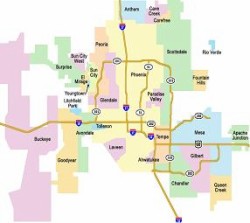 We serve the entire Phoenix area, including
  We accept Cash, Checks and Major Credit Cards.